Taxation
CBDT Exposes ₹9,169 Crore Fake Political Donation Scam Involving Small Parties, Accountants, and Middlemen
Overview
India's tax department has caught a big scam where people used fake donations to political parties to avoid paying taxes. The Central Board of Direct Taxes (CBDT) found out about a ₹9,169 crore racket. This involved small political parties, accountants, and middlemen who helped cheat the system. The news came out on November 9, 2025, and it's a wake-up call for how some people misuse rules meant for real political funding.
Why CBDT Monitors Donations
CBDT is the government body that handles income tax in India. They make sure people and companies pay the right taxes. Political donations are special because if you give money to a real political party, you can get tax breaks—meaning you pay less tax on your income. This is to encourage people to support politics. But some people fake these donations to save taxes without really helping any party.The rules say donations to registered political parties are tax-free for the parties, and donors can claim deductions. But there are limits and checks to stop misuse. In this case, the scam used loopholes in these rules.
What Happened in This Scam?
- The CBDT started looking into small political parties after a newspaper report from BusinessLine pointed out problems. They found a big network that faked donations to wash black money into white—meaning turning illegal or untaxed cash into legal funds.
- Over two years (2021-22 and 2022-23 financial years), people claimed ₹9,169 crore in fake tax deductions. That's like claiming they donated that much to parties, but it was all a trick. The scam was spread across many states in India.
- The Election Commission of India (ECI), which oversees political parties, had already removed over 800 small parties from their list in August and September 2025 because they were suspicious. This helped the tax team dig deeper.
How Did the Scam Work?
- Finding Donors: People or companies who wanted to save taxes would contact middlemen or accountants.
- Transferring Money: The donors sent money to small political parties through bank transfers or other ways. But this money wasn't a real donation—it was just on paper.
- Claiming Tax Breaks: The donors then showed these "donations" on their tax forms to get big deductions. For example, if you "donate" ₹100, you might save ₹30 in taxes (depending on your tax rate).
- Getting Money Back: After getting the tax break, the donors got most of their money back in cash from the parties or middlemen. The middlemen kept a small cut as commission.
- Faking Proof: To fool the tax officers, they made fake papers like donation receipts, lists of donors, and even fake bank books. This hid the real story.
- The parties reported these as real income, but it was all bogus. This way, everyone won—donors saved taxes, middlemen earned fees, and parties got some cash—except it was illegal.
Who Was Involved?
- RUPPs (Registered Unrecognised Political Parties): These are small parties registered with the ECI but not big enough to be recognized as state or national parties. At least 36 such parties were part of the scam. They handled ₹5,591 crore of the fake money. Just 10 of them dealt with 60% of that amount (about ₹3,355 crore).
- CAs (Chartered Accountants): These are experts who help with taxes and accounts. Some bad ones helped set up the fake deals and filed wrong tax returns.
- Intermediaries (Middlemen): These are people who connect donors to parties. They collected the money, took commissions, and made sure everything looked real.
- Donors: Rich people or businesses who wanted to hide income or save taxes. Some admitted during questioning that they got cash back after "donating."
How Did CBDT Find Out?
The scale of the scam is massive. The total fake tax deductions claimed reached ₹9,169 crore, out of which ₹6,116 crore was claimed in 2021–22 (Assessment Year 2022–23) and ₹3,053 crore in 2022–23 (Assessment Year 2023–24). This is an enormous amount, large enough to fund hospitals, schools, and other public services for millions of people. During a related verification drive, CBDT contacted more than 6 lakh taxpayers regarding incorrect claims. Out of them, around 51,000 individuals revised their tax filings, withdrawing ₹1,487 crore in fake deductions and voluntarily paying an additional ₹68 crore in taxes. The scam was uncovered after extensive nationwide raids and investigations. The tax authorities scrutinized 420 bank accounts and 200 tax records, and also recovered WhatsApp chats that revealed planning and coordination behind the fraud. During questioning, several individuals involved in the racket admitted to their roles, confirming that this was not a mistake, but a well-structured and pre-planned operation.
Why Does This Matter?
- This scam shows holes in India's political funding rules. Small parties can be misused because they're not checked as much as big ones. It also hurts honest taxpayers—the government loses money that could help the country.
- Now, CBDT and ECI might share more info to stop this. There could be stricter rules for donations, like better checks on parties and donors.
- In short, this is a big win for the tax department, but it reminds us to watch how money flows in politics.
About author

Zinkpot — We Inform, You Perform.
Ask Anything, Know Better
अपना प्रश्न पूछें
-
What Got Cheaper and Costlier After GST Rate Cut 2025?
September 22 GST Rate Reforms 2025: Overview India's Goods and Services Tax (GST) underwent its most significant overhaul since 2017 with the rollout of "GST 2.0" reforms, approved by the 56th GST Council meeting on September 3, 2025. Effective from September 22, 2025 (coinciding with the start of Navratri), these changes simplify the structure from four main slabs (5%, 12%, 18%, 28%) plus cess to a streamlined system: 0% (exemptions), 5%, 18%, and a new 40% slab for luxury and "sin" goods. Tobacco products like...
-
NEXT GEN-GST REFORMS! What are the major changes made in GST 2.0 in 2025?
September 05 Category / Examples Old GST New GST Notes Consumer durables – air-conditioners, dishwashers, TVs (LCD/LED) 28% 18% Rate rationalisation for electronics. Cement 28% 18% Relief for housing & infra. Small cars (≤1200cc petrol/LPG/CNG ≤4000 mm; ≤1500cc diesel ≤4000 mm) 28% 18% Relief for middle class Motorcycles ≤350 cc 28% 18% >350 cc moved to 40%. Three-wheelers (HSN...
-
How GST council's voting and decision takes place?
September 05 The GST Council is established under Article 279A, introduced by the 101st Constitutional Amendment Act, 2016. It functions as a joint forum for decision-making between the Union and the States. Members of GST council include: Union Finance Minister (Chairperson) Union Minister of State in charge of Revenue/Finance State Finance Ministers or their nominees Weighted Voting Structure Decisions are made through a weighted voting system, structured as follows: Central Government holds 1/3 (≈33.33%) of...
-
What GST reforms may include?
September 03 The GST Council, led by Finance Minister Nirmala Sitharaman, is advancing an extensive overhaul of the Goods and Services Tax system—arguably the most significant since its launch in 2017. Key highlights include Elimination of 12% and 28% slabs: These are being phased out in favor of a two-rate structure—5% for essential and "merit" goods and 18% for standard items. A 40% "sin and luxury" rate will initially remain for high-value goods like tobacco and premium automobiles. Benefits...
-
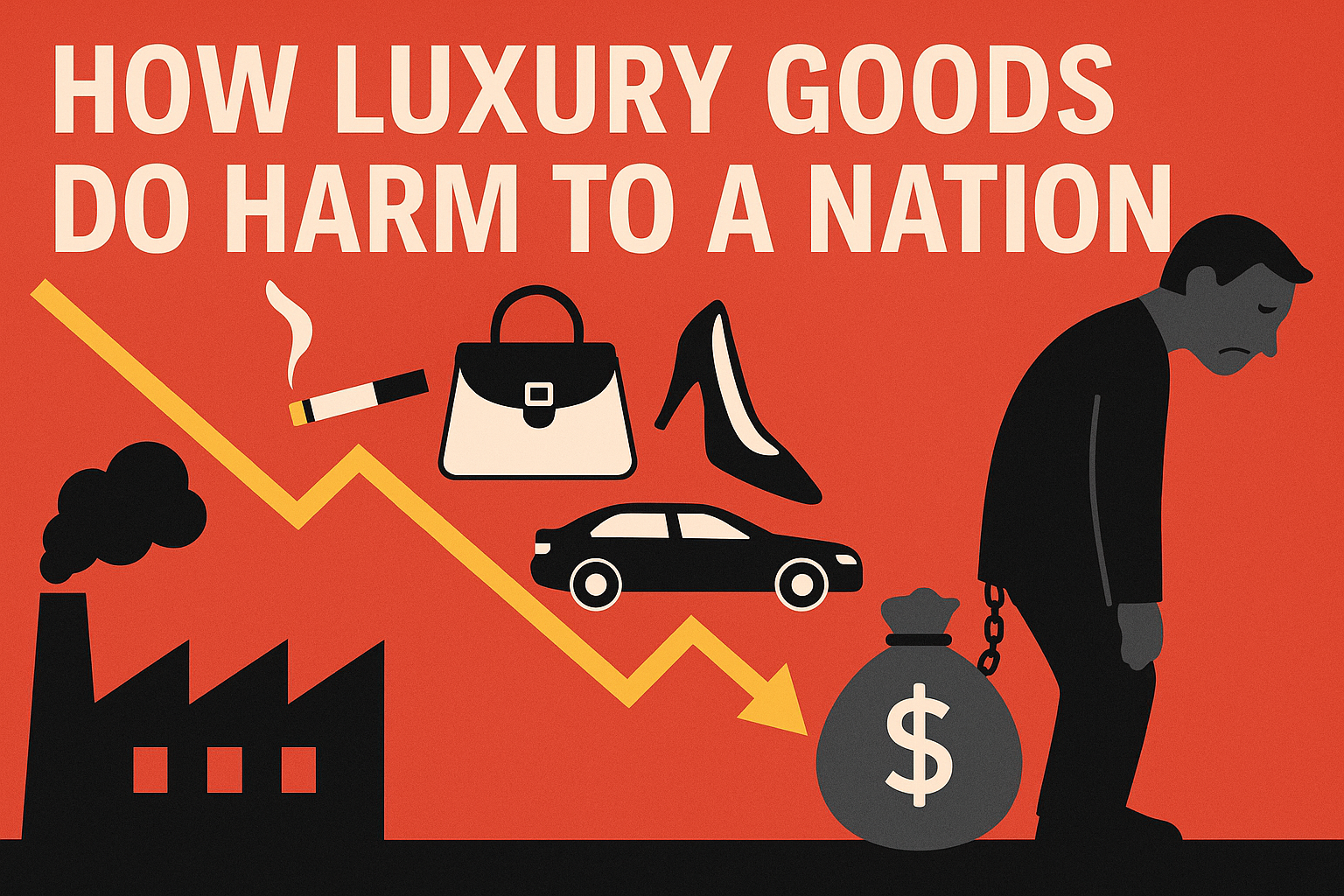
How Luxury Goods are Harmful for a Nation?
August 25 WHAT Luxury goods like expensive cars, branded clothes, diamonds, and imported wines are seen as a status symbol in today’s world. They may give happiness and prestige to individuals, but at the national level, they create economic pressure, social inequality, and cultural harm. Key Points and Analysis Issue Analysis Result 1. Dependence on Imports Most luxury goods are imported, sending foreign exchange abroad. Money drains out instead of building...
-
GST Rates change : How much cheaper your new car may become?
August 23 CONTEXT The government is planning to rationalize the GST rates. As of now the different rates are 0%, 5%, 12%, 18% and 28%. The cars attract a GST of 28% making them costlier. The government's Group of Ministers (GoM) are discussing potential changes to India's GST structure for vehicles, which could significantly reduce prices and make car ownership more affordable. They are backing a simplified two-slab GST system: 5% for essentials and 18% for standard items. This overhaul might lower GST on small cars and...
-
GST collection nearly doubles in 5 years
June 30 WHAT? India’s Goods and Services Tax (GST) collection nearly doubled over five years, reaching an all-time high of ₹22.08 lakh crore in FY25. This marks eight years since GST’s introduction on July 1, 2017, reflecting significant growth in the tax regime. Key Details Growth Trajectory: GST collections rose from ₹11.37 lakh crore in FY21 to ₹22.08 lakh crore in FY25, a year-on-year increase of 9.4%. The average monthly collection increased from ₹1.51 lakh crore in FY22 to ₹1.84...
-
State of the Economy. Why are GST collections soaring—and will it last?
June 05 SUMMARY India's Goods and Services Tax (GST) collections have been on an upward trajectory, with April 2025 witnessing a record high of ₹2.37 lakh crore—a 12.6% year-on-year increase. This surge is attributed to several key factors: Key Drivers of Rising GST Collections Robust Import Activity: A significant 20.8% increase in GST revenue from imported goods, particularly high-value items like electronics and gold, has bolstered overall collections. Enhanced Domestic...
-
What is Authority for Advance Ruling (AAR) and Appellate Authority for Advance Ruling (AAAR)?
January 18 WHAT? These are two separate bodies under the GST law. The AAR is responsible for providing a binding ruling to an applicant, while the AAAR is responsible for hearing appeals against the rulings of the AAR. The AAAR has the power to examine appeals and pass orders, which are binding on the taxpayer and the tax authorities. What is Advance Ruling? An advance ruling is a legal mechanism provided by tax authorities to give taxpayers clarity and certainty regarding the interpretation and application of tax...
-
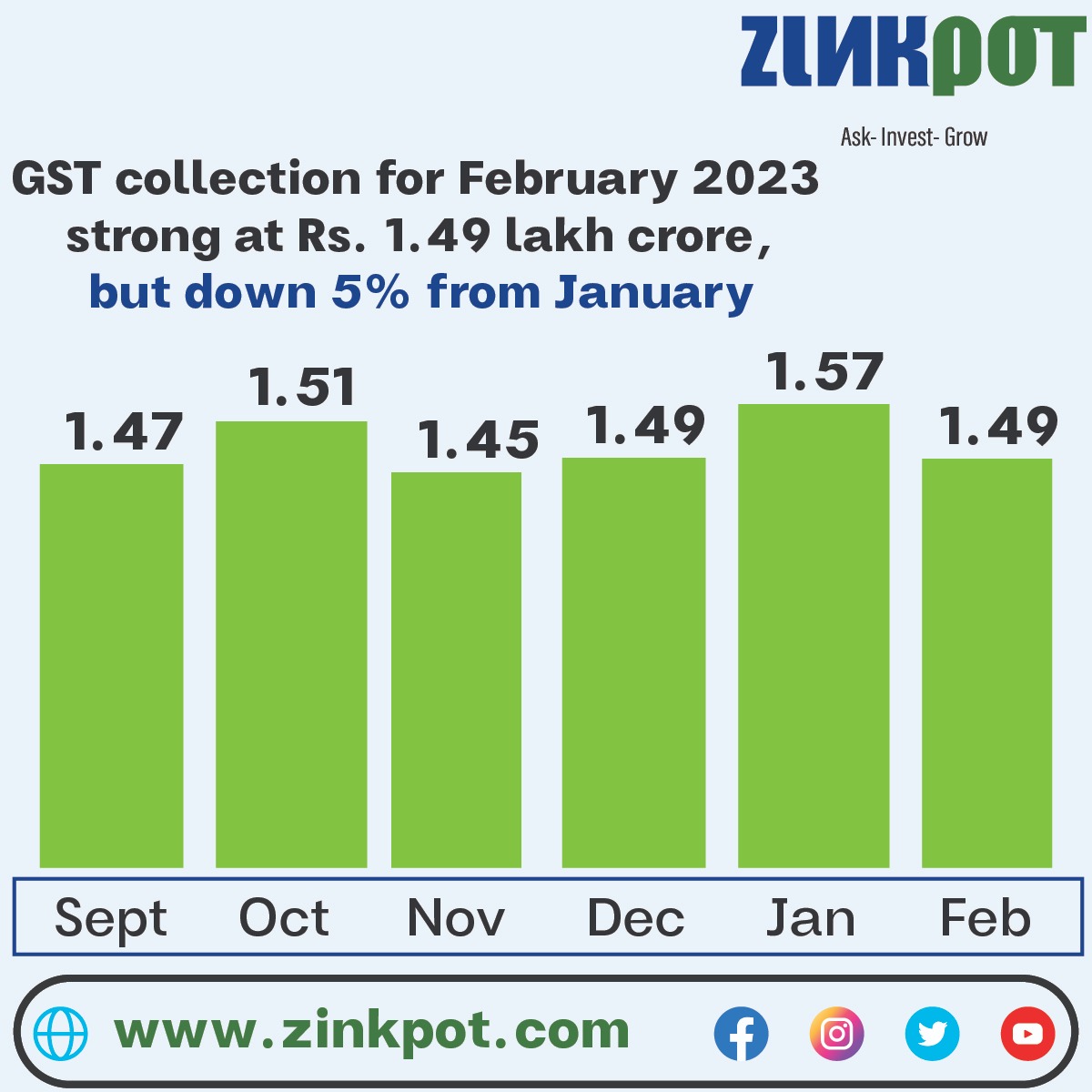
Recent statistics about Indian Economy (Part 2/3)
March 03 As per the recent reports, Q3 of FY 2022-23 has experienced lower growth rate than the previous quarters. GST collection is also 5% lower in February than in January. Look at the catalogues for more details.
Comments
Write Comment