CURRENT NEWS
FDI at an all-time low: Reasons for downfall and why experts predict a turnaround soon
SUMMARY
Net FDI means the difference of FDI received in India and the FDI sent from India. India's net Foreign Direct Investment (FDI) experienced a significant decline of 96.5% in the fiscal year 2024–25, dropping to just $353 million from $10 billion the previous year, marking the lowest level on record. India received a gross FDI of $81 billion in FY25.
Key Reasons for the Decline
-
Increased Repatriation and Outward Investments: While gross FDI inflows rose to $81.1 billion, up from $71 billion in 2023-24 the previous year, net FDI plummeted due to a surge in repatriation of funds by foreign investors and a significant increase in outward investments by Indian companies.
-
Profit-Taking Amid Booming IPOs: The booming IPO market provided lucrative exit opportunities for long-term investors in major companies like Hyundai Motor and Swiggy, leading to substantial investor withdrawals.
-
Global Economic Factors: High global interest rates, geopolitical tensions, and cautious capital deployment have also contributed to the decline in net FDI.
-
Trade war and Tariff war threats led to outflow of FDI
Outlook: Signs of a Turnaround
Despite the downturn, experts remain optimistic about a rebound in FDI inflows:
-
Sustained Gross Inflows: The increase in gross FDI inflows indicates that India continues to be a favored destination for foreign investors, reflecting enduring confidence in the country's long-term economic trajectory and structural growth potential.
-
Maturing Market Dynamics: Analysts view the current decline as a natural phase in a maturing market, where profit-taking and outward investments are part of evolving investor behavior.
-
Policy Measures: The Indian government is considering expanded measures to boost strategic foreign investment, including allowing greater flexibility for foreign investors to acquire stakes in local companies through instruments like mezzanine financing.
In summary, while India's net FDI has reached a record low due to increased repatriations and outward investments, the rise in gross inflows and ongoing policy initiatives suggest potential for a turnaround in the near future.
CLICK HERE FOR FULL NEWS
About author

Zinkpot — We Inform, You Perform.
Ask Anything, Know Better
अपना प्रश्न पूछें
-
About Trade Policy Uncertainty (TPU) Index and Global Economic Policy Uncertainty (GEPU) Index
April 08 Trade Policy Uncertainty (TPU) Index The Trade Policy Uncertainty (TPU) Index measures uncertainty related specifically to international trade policies, such as tariffs, trade wars, sanctions, or changes in trade agreements. It indicates how uncertain businesses and investors feel about future trade rules. The TPU index is based on the broader Economic Policy Uncertainty research framework developed by economists: Scott Baker Nicholas Bloom Steven Davis How It Is Calculated? The TPU...
-
India plans outreach in 40 countries to boost textiles exports amid US tariff blow
August 27 WHAT? From August 27, 2025, the US imposed a 50% tariff on Indian goods, hitting $48 billion exports. Sectors worst affected: Textiles & Apparel (USD 10.3 bn) Gems & Jewellery (USD 12 bn) Electrical & Mechanical Machinery (USD 9 bn) Plus: shrimp, leather, footwear, animal products, chemicals. Apparel sector faces a 30–31% tariff disadvantage compared to Bangladesh, Vietnam, Sri Lanka, Cambodia, Indonesia. Industry says this could drive India “out of the US...
-
Difference between FTA and BTA in trade
July 23 WHAT? The terms Free Trade Agreement (FTA) and Bilateral Trade Agreement (BTA) are often used in the context of international trade, but they have distinct meanings and implications. Below is a clear explanation of the differences based on their definitions, scope, and application. Free Trade Agreement (FTA) An FTA is a treaty between two or more countries to reduce or eliminate trade barriers, such as tariffs and quotas, to facilitate the free flow of goods and services. FTAs aim to create a free trade...
-
BRICS देशों को TRUMP की धमकी!
July 11
-
What is Agreement on Safeguards under WTO?
June 04 WHAT? The Agreement on Safeguards (AoS) is a World Trade Organization (WTO) agreement that governs the use of safeguard measures — temporary import restrictions that a country can impose when a sudden surge in imports causes serious injury to its domestic industry. It is one of the key agreements under the Uruguay Round (1995) of WTO. Purpose of the Agreement To ensure that the safeguard measures: Are applied transparently and fairly Are temporary and non-protectionist Are based on clear...
-
2024 में INDIA में रिकॉर्ड तोड़ FOREIGN INVESTMENT FDI
June 03
-
What is Tariff Rate Quota (TRQ)?
May 20 DEFINITION Tariff Rate Quota (TRQ) is a trade policy tool that allows a specified quantity of a product to be imported at a lower tariff rate, while quantities above that threshold are subject to higher tariffs. Example: India allows import of 100,000 tonnes of maize at 15% tariff (TRQ). Any import beyond 100,000 tonnes is charged 60% tariff. Directorate General of Foreign Trade (DGFT) issues TRQ licenses and Customs authorities enforce tariffs at the borders. Purpose of TRQs Protect...
-
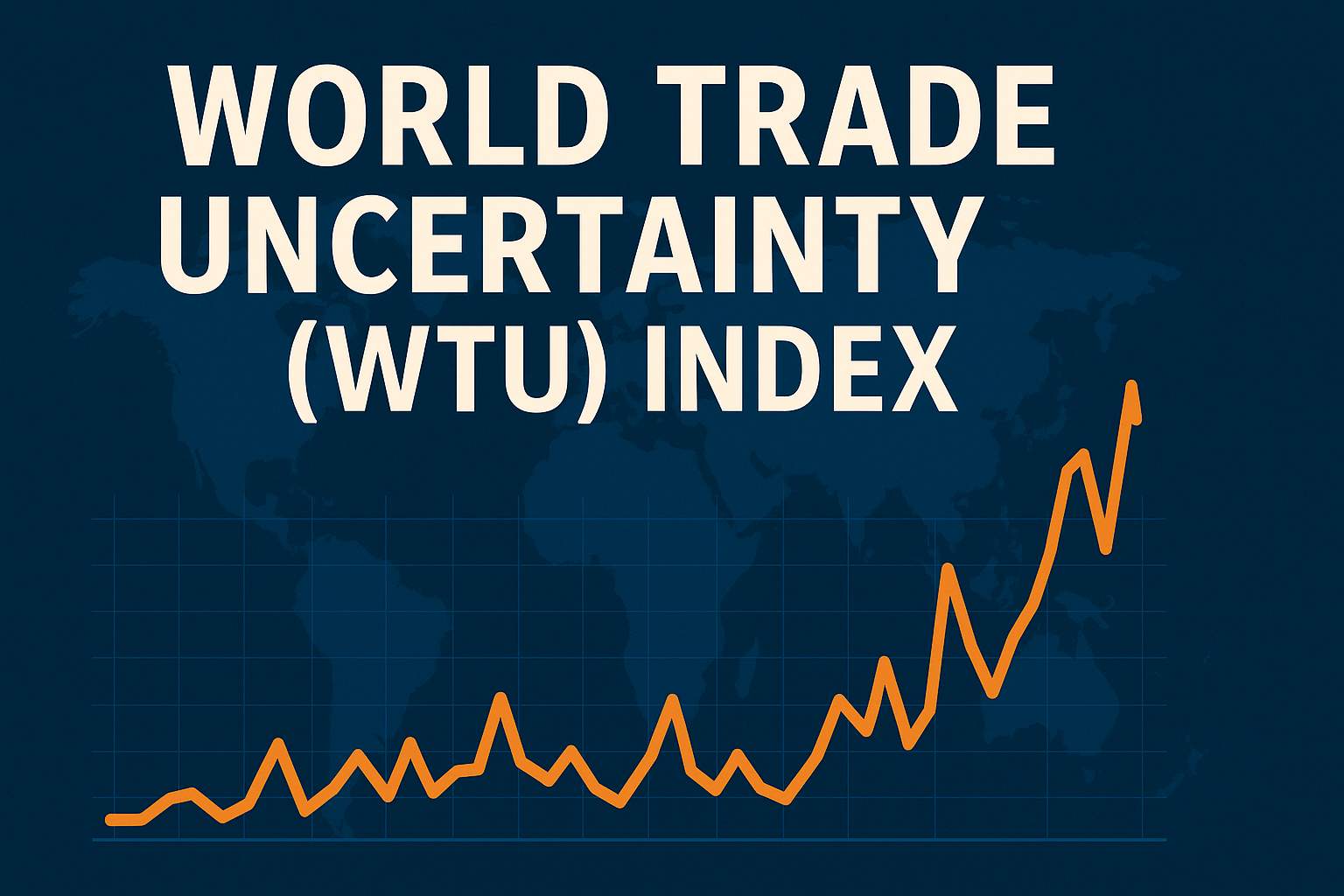
What is World Trade Uncertainty (WTU) Index?
May 13 WHAT? The World Trade Uncertainty Index is a global economic indicator developed by the International Monetary Fund (IMF) to measure uncertainty related to trade policy across countries and over time. It is published by International Monetary Fund (IMF) and Updated quarterly, available on the IMF's official website. What Does It Measure? The WTU Index quantifies trade-related uncertainty by analyzing the frequency of terms related to "trade" and "uncertainty" in the Economist...
-

Complete details of INDIA-UK Free Trade Agreement signed in 2025
May 09 WHAT India and the United Kingdom have finalized a landmark Free Trade Agreement (FTA) on May 6, 2025, after over three years of negotiations. This agreement is poised to significantly enhance bilateral trade, aiming to boost annual trade by £25.5 billion by 2040. Trade between the two nations totalled £42.6 billion in 2024. Total UK exports to India amounted to £17.1 billion, while total UK imports from India amounted to £25.5 billion in 2024. India was Britain's 11th-largest trading partner last...
-

What is a Countervailing Duty (CVD)?
April 29 COUNTERVAILING DUTY Countervailing duty (CVD) is a type of import duty which a government imposes on the imports to protect it’s domestic producers from the negative impact of subsidies being given by the exporting country to their exporters or producers. CVD is thus an import tax by the importing country on imported products to counterbalance undue subsidies. WHY? Foreign governments many times provide subsidies to their producers to make their products cheaper and boost their demand in other...
Comments
Write Comment