Economy and Finance
What is Production Linked Incentive scheme (PLI)?
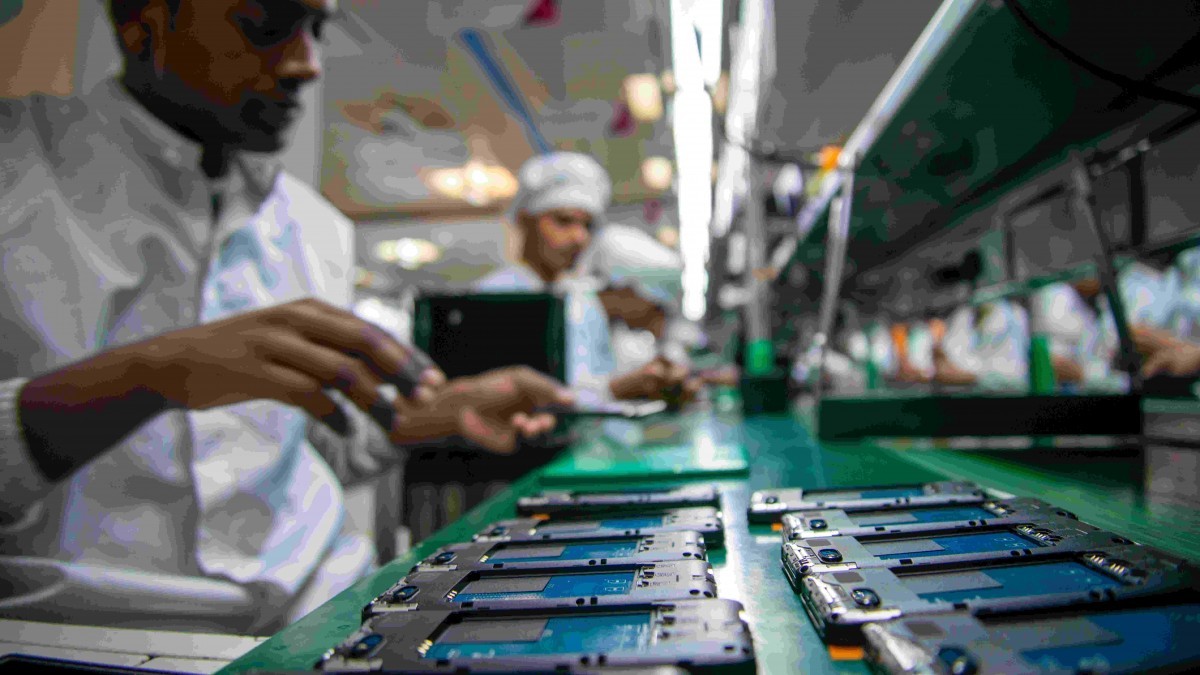
The PLI scheme or Production Linked Incentive scheme is a scheme that intends to give companies cash incentives as they gradually increase their sales of products manufactured in domestic units from a given base year. The scheme was first introduced in March 2020.
The scheme shall extend an incentive of 4% to 6% on incremental sales (over base year) of goods manufactured in India and covered under target segments, to eligible companies, for a period of five (5) years subsequent to the base year as defined.
PLIs are basically financial inducements for businesses to amplify their output. They could come in the form of tax rebates, lowered import and export duties, or easier land acquisition norms.
Keeping in view India's vision of becoming 'Atmanirbhar', Production Linked Incentive (PLI) Schemes for 14 key sectors have been announced with an outlay of Rs. 1.97 lakh crore (over US$26 billion) to enhance India's Manufacturing capabilities and Exports.
The 14 sectors are: (i) Mobile Manufacturing and Specified Electronic Components, (ii) Critical Key Starting Materials/Drug Intermediaries & Active Pharmaceutical Ingredients, (iii) Manufacturing of Medical Devices (iv) Automobiles and Auto Components, (v) Pharmaceuticals Drugs, (vi) Specialty Steel, (vii) Telecom & Networking Products, (viii) Electronic/Technology Products, (ix) White Goods (ACs and LEDs), (x) Food Products, (xi) Textile Products: MMF segment and technical textiles, (xii) High efficiency solar PV modules, (xiii) Advanced Chemistry Cell (ACC) Battery, and (xiv) Drones and Drone Components.
The purpose of the PLI Schemes is to attract investments in key sectors and cutting-edge technology; ensure efficiency and bring economies of size and scale in the manufacturing sector and make Indian companies and manufacturers globally competitive.
These schemes have the potential of significantly boosting production, employment and economic growth over the next five years or so.
PLI Schemes for all 14 Sectors have been notified by the concerned Ministries/ Departments after due approval. These Schemes are in various stages of implementation by the implementing Ministries/ Departments.
In May 2023, the Cabinet approved a renewed Product-Linked Incentive (PLI) scheme for IT hardware worth Rs 17,000 crore with a six-year tenure. It aimed at boosting the domestic manufacturing of laptops, tablets, all-in-one PCs, servers, and ultra-small form factor devices.
It is anticipated to stimulate incremental production worth Rs 3.35 lakh crore and create 2 lakh employment opportunities. The current version also raises the basic incentive level to over 5%.
At present, as many as 27 companies have been approved for the PLI scheme for IT hardware. Twenty-three of these companies are ready to start manufacturing on day zero and rest four companies will start within 90 days. These 27 companies will lead to Rs 3,000 crore, direct employment of 50,000, and indirect employment of 1,50,000.
The companies that have been approved include Dell, Foxconn, HP, Lenovo, Flextronics, VVDL, Rising Stars Hi-Tech, India Sales, Padget Electronics, SOJO, VVDN, Goodworth Electronics, Neolync Tele Communications, Syrma SGS, Bhagwati Products, Netweb Technologies, Genus Electrotech, Sahasra, Hangsine, Riot Labz, Smile, Mega Networks, Plumage Solutions, HLBS Tech, Panache Digilife, RDP Workstations, Kaynes, INP Technologies, Optiemus, ITI, Sancraft.
About author

Zinkpot — We Inform, You Perform.
Ask Anything, Know Better
अपना प्रश्न पूछें
-
Third Round of PLI for Specialty Steel: Boosting India’s High-Tech Manufacturing
November 05 Introduction India's government is making it easier for small businesses to join a program that boosts steel production. On November 4, 2025, Union Steel Minister H D Kumaraswamy launched the third round of the Production Linked Incentive (PLI) scheme for specialty steel. This round, called PLI 1.2, aims to attract big investments and help make India a world leader in high-quality steel. In this article, we'll explain what the scheme is, the new changes for MSMEs (Micro, Small, and Medium Enterprises), its details, benefits, and...
-
What is the Design Linked Incentive (DLI) Scheme?
November 03 What ? The Design Linked Incentive (DLI) Scheme is a program by the Indian government to help grow the country's semiconductor design industry. Semiconductors are tiny chips used in electronics like phones, computers, and cars. India wants to become a leader in designing these chips instead of just buying them from other countries. The scheme gives money and tools to Indian companies, startups, and small businesses (MSMEs) that work on chip designs. It started in December 2021 and is run by the Ministry of Electronics and...
-
30 सालों में कैसे बना CHINA MANUFACTURING का SUPER POWER? USA टेंशन में!
July 06
-
Factory output growth dips to 9-month low of 1.2% in May
June 30 WHAT? India’s factory output growth, measured by the Index of Industrial Production (IIP), dropped to a nine-month low of 1.2% in May 2025, down from 2.7% in April. This slowdown reflects challenges across key sectors, impacting the industrial landscape. Key Details Manufacturing growth decelerated to 2.6% in May 2025 from 5.1% a year ago. Mining output contracted by 0.1%, a sharp decline from 6.6% growth in May 2024. Power production fell by 5.8%, contrasting with a 13.7% rise the previous...
-
What is the PMI Index?
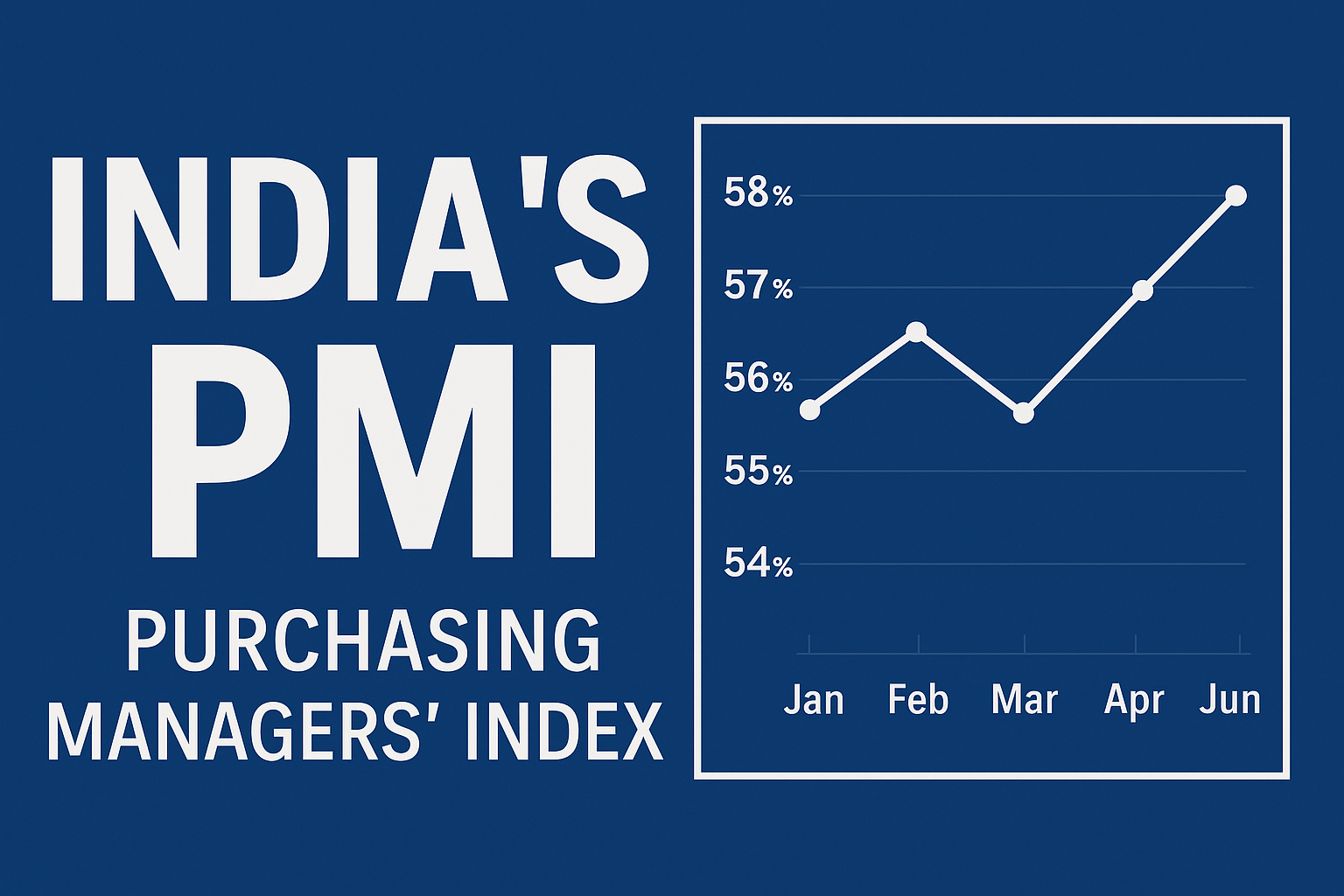
June 04 WHAT? The Purchasing Managers' Index (PMI) is an economic indicator derived from monthly surveys of private sector companies. It reflects the prevailing direction of economic trends in manufacturing and services sectors. Who publishes PMI in India? Compiled by: S&P Global (formerly IHS Markit) Published for India by: S&P Global Not released by government bodies like MOSPI or RBI Types of PMI in India PMI Type Sector...
-
India services sector growth steady in May as demand remains strong, PMI shows
June 04 SUMMARY India's services sector sustained robust growth in May 2025, with the HSBC India Services Purchasing Managers' Index (PMI) edging up to 58.8 from April's 58.7, marking nearly four consecutive years above the 50-point threshold that indicates expansion. WHAT IS PMI INDEX? CLICK HERE This growth was driven by strong new business inflows, attributed to advertising efforts and repeat clientele, as well as a significant surge in export orders, one of the largest in the survey's...
-
Why are small businesses unhappy? What is MSME 45 Days Payment Rule?
June 07 More than 40,000 small businesses, including 12,000 in Gujarat, have cancelled their MSME registration and have approached the Supreme Court with an appeal to help them. The Finance Act 2023 inserted Section 43B(h), which stipulates that any money owed by any company to Micro and Small enterprises for goods or services supplied may be deducted only in the same year if it is paid within 45 days to the MSMEs. The section disallows businesses from claiming deductions for expenses incurred towards goods or services...
-
What is the Index of Industrial Production (IIP) and Core sector in Industries?
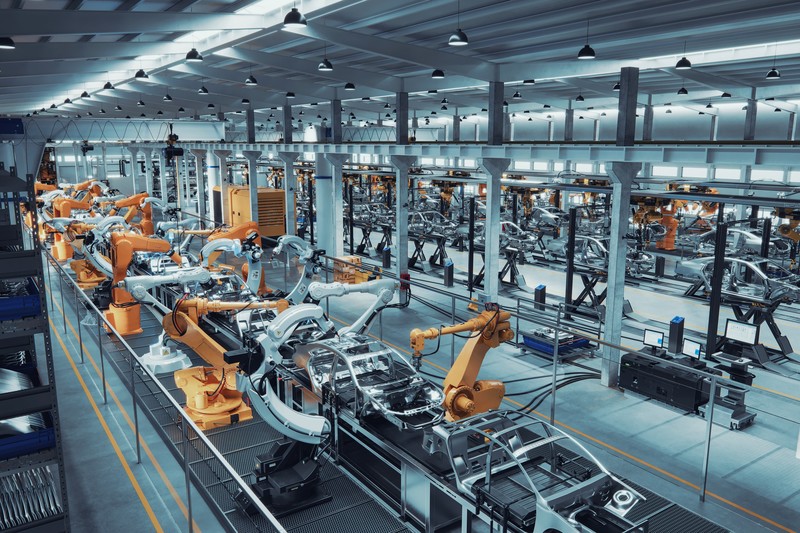
March 23 WHAT? Index of Industrial Production (IIP) is an index that indicates the performance of various industrial sectors of the Indian economy. It is a composite indicator of the general level of industrial activity in the economy which measures the volume of production that takes place in the country every month. Based on the performance measured every month, a general increase or decrease in the industrial activity can be measured. It is compiled and published monthly by the National Statistical Office (NSO), Ministry of Statistics...
Comments
Write Comment